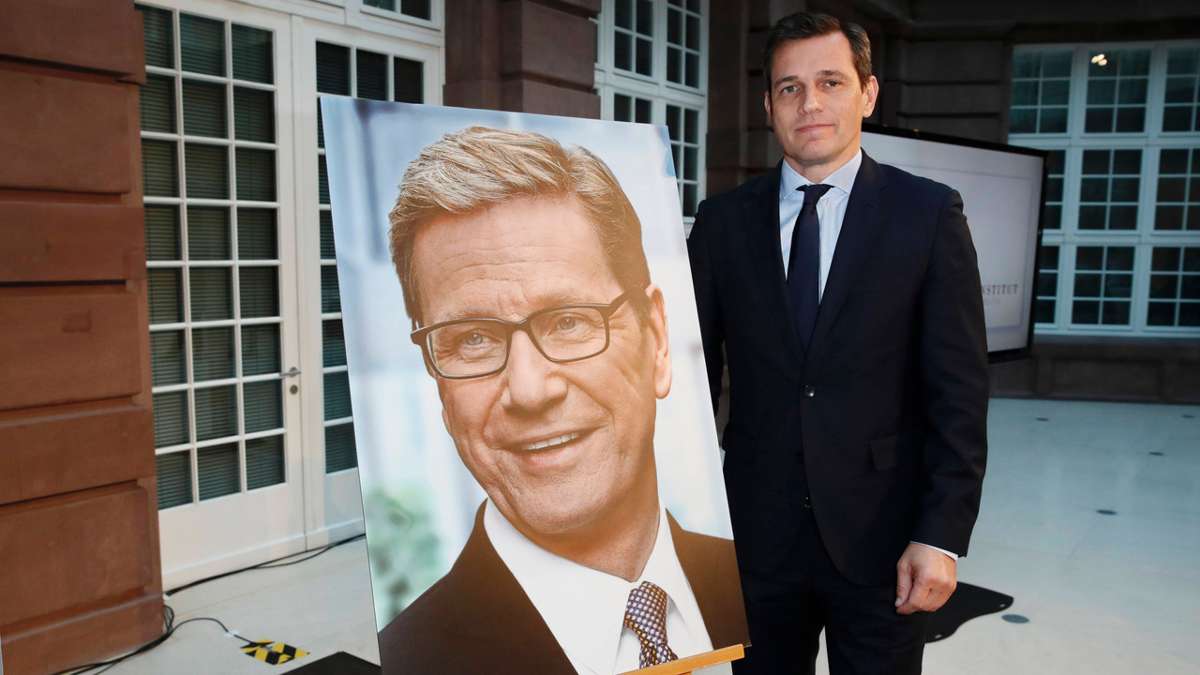
Mronz on Guido Westerwelle: Love, Grief, and a Promise Kept
The passing of a loved one leaves an indelible mark, but when that individual has also shaped a nation, their legacy resonates far beyond personal sorrow. As Germany approaches the tenth anniversary of the passing of former Vice Chancellor and Foreign Minister, Guido Westerwelle, the reflections of his longtime partner, Michael Mronz, offer a poignant window into enduring love, profound grief, and a promise that continues to be honored.
Guido Westerwelle's 10th Death Anniversary: A Lasting Legacy will undoubtedly bring renewed focus to a man who, even a decade after his death, remains a significant figure in German political memory.
On March 18, 2016, Guido Westerwelle succumbed to complications following a bone marrow transplant, a battle against acute myeloid leukemia that he fought with characteristic determination. His death in Cologne marked the end of a remarkable life, leaving behind a nation he served with distinction and a partner whose world was irrevocably changed. Mronz, reflecting on the man he spent 13 years alongside, from 2003 until that somber day, instantly recalls Westerwelle's "smile. Cheerful, positive, curious." It's a testament to a vibrant spirit that even illness couldn't entirely dim, and a powerful image of the man Germany remembers.
The Enduring Love and Lingering Grief of Michael Mronz
The depth of the bond between Guido Westerwelle and Michael Mronz was clear for all to see. Their relationship, which culminated in marriage, was a pioneering example of same-sex partnership in German public life, breaking barriers and fostering acceptance. Mronz's continued reflections on his partner, especially as the 10-year mark of
Guido Westerwelle Tod approaches, speak volumes about a love that transcends death.
Grief, as Mronz’s words reveal, is not a finite process but an ongoing journey. Even after ten years, the memory of Westerwelle remains vivid, punctuated by the smile that was his signature. This deep personal connection offers valuable insights into the private life of a man whose public persona was often defined by political acumen and ambition. It humanizes the statesman, reminding us that behind every public figure is a person with a rich emotional landscape, shared with those closest to them.
For those navigating their own experiences with loss, Mronz’s open reflections provide comfort and solidarity. His ability to speak about the positive memories – the cheerfulness, positivity, and curiosity – alongside the pain of absence, highlights a healthy approach to remembrance. It suggests that while grief is real and powerful, it doesn't diminish the joy and love that once existed; instead, it becomes woven into the fabric of ongoing life.
Guido Westerwelle's Trailblazing Political Career and Lasting Impact
Guido Westerwelle was more than just a politician; he was a force of nature who profoundly shaped both the Free Democratic Party (FDP) and the broader German political landscape. Born shortly after Christmas in 1961 in Bad Honnef, North Rhine-Westphalia, Westerwelle rose through the ranks to become not only Foreign Minister and Vice-Chancellor but also a figure who broke down societal barriers.
His political career was marked by:
- Transforming the FDP: As chairman, he revitalized the party, leading it through significant electoral successes.
- A Pioneer for Openness: Westerwelle's public acknowledgment of his sexual orientation, subtly hinted at in a 1999 interview with Dominik Wichmann for the Süddeutsche Zeitung Magazin, was groundbreaking. It allowed him to show vulnerability in a political arena often devoid of it, paving the way for greater acceptance and representation.
- Diplomatic Acumen: As Foreign Minister, his approach was characterized by a distinct non-interventionist stance, prioritizing restraint and a commitment to sustainable peace. He was a vocal advocate for a rule- and international law-based order, believing firmly in diplomatic solutions over military interventions where possible.
- Unwavering Principles: Even if he were active today, his fundamental pursuit of peace would not have wavered. Dominik Wichmann, who co-authored Westerwelle's biography "Zwischen zwei Leben" and was involved in the ARD documentary "Westerwelle," believes his commitment to protecting Israel and upholding its interests – a core tenet of German statecraft – would have remained steadfast.
Westerwelle's legacy is one of courage, conviction, and a deeply held belief in liberal values. His pragmatic approach extended to coalition politics; he viewed partners not merely as party friends but as genuine collaborators, valuing their ability to implement shared political positions. This pragmatism suggests he would have navigated contemporary political alliances, even with figures like a Chancellor Friedrich Merz, as effectively as he did with Angela Merkel.
The Promise Kept: Living by Westerwelle's Legacy
The title hints at a "promise kept" by Michael Mronz. While the exact nature of this promise isn't explicitly detailed in public records, it strongly suggests a commitment to honor Guido Westerwelle's memory, uphold his values, and continue to live a life imbued with the spirit of joy and curiosity that Westerwelle himself embodied. This promise might manifest in several ways:
*
Preserving his Memory: Actively participating in commemorative events, like the upcoming ARD documentary, ensures Westerwelle's contributions are not forgotten.
*
Upholding his Ideals: Continuing to advocate for the principles Westerwelle championed, such as a peaceful international order, human rights, and liberal democracy.
*
Embracing Life: Perhaps the deepest promise is to continue living life fully, with the cheerfulness and positivity that Mronz remembers so fondly in Westerwelle, even in the face of profound loss. It’s a powerful act of defiance against grief's potential to diminish one's spirit.
This promise is not merely a personal vow but also a broader appeal to society to reflect on Westerwelle’s principles. In an era marked by increasing global instability, Westerwelle's call for "Besonnenheit" (prudence or circumspection) and adherence to international law feels more relevant than ever. He would have been "a Mahner zu Besonnenheit" – a warning voice for moderation and thoughtful action in challenging times.
How Would Westerwelle Navigate Today's Foreign Policy Challenges? is a question often pondered, and the answer, rooted in his past actions, points to a man who prioritized diplomacy and principled engagement.
Remembering Guido Westerwelle: A Decade On
As the tenth anniversary of Guido Westerwelle's death approaches on March 18, 2026, his impact continues to be felt across Germany and beyond. His burial at Melaten-Friedhof on April 2, 2016, marked a public farewell, but his spirit and ideas live on. The reflections of Michael Mronz remind us that behind the political figure was a deeply loved individual whose smile, positivity, and curiosity remain vivid.
Westerwelle's life and legacy offer important lessons: the courage to be authentic, the commitment to peace through diplomacy, and the strength to endure personal and political challenges. Through Mronz's eyes, we see a story of enduring love and a promise kept, ensuring that Guido Westerwelle's influence continues to inspire, even ten years after
Guido Westerwelle Tod. His example serves as a potent reminder of the importance of principled leadership and the lasting power of human connection.