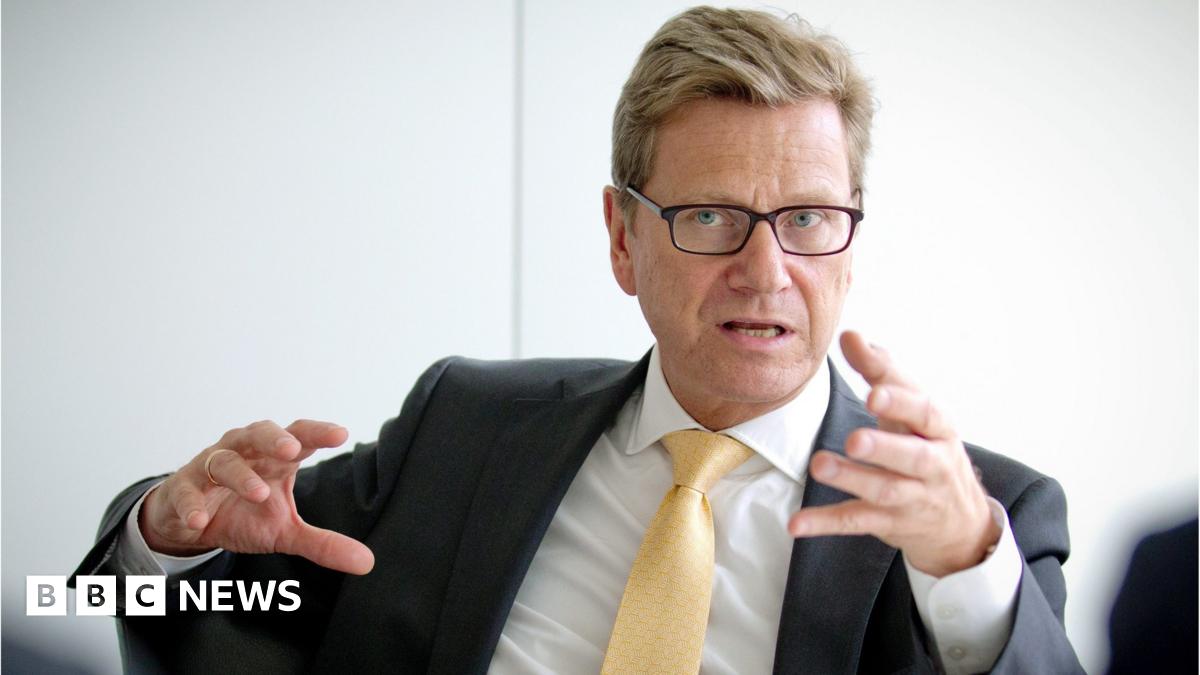
Guido Westerwelle's 10th Death Anniversary: A Lasting Legacy
On March 18, 2026, Germany will mark a poignant milestone: the 10th anniversary of the passing of Guido Westerwelle. His death, on this day in 2016 from complications following a bone marrow transplant to combat acute myeloid leukemia, left a void not only in the Free Democratic Party (FDP) but across the entire German political landscape. Born shortly after Christmas in 1961 in Bad Honnef, North Rhine-Westphalia, Westerwelle rose to become a defining figure of his era, serving as Foreign Minister and Vice-Chancellor. Yet, his legacy transcends mere political titles, encapsulating a man who fearlessly challenged norms, embraced vulnerability, and advocated for a world order built on restraint and dialogue. As we commemorate this solemn anniversary, it's an opportune moment to reflect on his enduring impact and ponder how his distinctive approach might resonate with today's complex challenges.
A Legacy Beyond Politics: How Guido Westerwelle Shaped a Nation
Guido Westerwelle was more than a politician; he was a trailblazer who left an indelible mark on German society. For years, he led the FDP, steering it through various political tides with a blend of conviction and pragmatism. His tenure as Germany's Foreign Minister from 2009 to 2013, and concurrently as Vice-Chancellor, saw him represent Germany on the global stage with a distinct diplomatic philosophy.
Beyond his official duties, Westerwelle was instrumental in breaking down societal barriers. His public acknowledgment of his sexual orientation, subtly hinted at in a 1999 interview in Venice with Dominik Wichmann for the
Süddeutsche Zeitung Magazin, and later openly embraced, marked a significant moment for LGBTQ+ visibility in German politics. This act of courage allowed him to connect with people on a deeply personal level, demonstrating a vulnerability that was (and often still is) rare in high-level political discourse. It showcased a leader who was authentic, human, and willing to challenge established norms, earning him respect far beyond his party lines.
The upcoming documentary "Westerwelle," featuring significant contributions from Dominik Wichmann, who co-authored Westerwelle's biography "Zwischen zwei Leben" (Between Two Lives), promises to offer fresh insights into his character and political journey. Wichmann's unique perspective, gleaned from intimate collaboration, underscores Westerwelle's multifaceted personality and his profound influence on German public life. His ability to blend astute political maneuvering with genuine personal conviction made him a unique force, forever altering the perception of what a leading German politician could be.
Navigating Today's Geopolitical Landscape: Westerwelle's Hypothetical Approach
Guido Westerwelle's active political career concluded over a decade ago, meaning he was not directly shaped by the tumultuous events that have unfolded in Europe and beyond in recent years. His foreign policy philosophy was firmly rooted in a non-interventionist outlook, prioritizing restraint and a commitment to sustainable peace. "The imperative of caution was very important to him," noted Dominik Wichmann in a recent interview.
While the world has undoubtedly shifted, the core tenets of Westerwelle's approach – namely, an unwavering dedication to a rule- and international law-based order – would likely have remained steadfast. He would have been a strong advocate for de-escalation and diplomatic solutions. However, he was also a pragmatist. It is safe to assume that the German *Staatsräson* (reason of state) – the commitment to protect Israel and stand up for Israeli interests – would not have changed one iota under his leadership, even as he simultaneously championed circumspection.
In an era defined by geopolitical flashpoints and shifting alliances, Westerwelle's voice would likely have been one of moderation and reasoned dialogue. He would have sought multilateral solutions and emphasized the long-term consequences of military intervention. His nuanced perspective, balancing national interests with international law and the pursuit of peace, offers a compelling thought experiment for today's leaders. For a deeper dive into this hypothetical scenario, explore our related article:
How Would Westerwelle Navigate Today's Foreign Policy Challenges?
The Man Behind the Politician: Vulnerability, Relationships, and Personal Courage
Guido Westerwelle's public persona was often defined by his quick wit and sharp intellect, but beneath the political strategist was a man of profound personal courage and warmth. His relationship with sports manager Michael Mronz, which spanned 13 years from 2003 until Westerwelle's death on March 18, 2016, was a testament to his openness and humanity.
Mronz, reflecting on the 10th anniversary of Guido Westerwelle's death, speaks movingly about love, grief, and a promise kept. When asked what first comes to mind when he thinks of his late partner, Mronz instantly replies: "His smile. Cheerful, positive, curious." This simple yet powerful image encapsulates the enduring impact Westerwelle had on those closest to him. His ability to show vulnerability, not just in his personal life but also in his battle with acute myeloid leukemia, resonated deeply with the public. He faced his illness with a rare blend of candor and resilience, inspiring many with his determination.
Westerwelle's burial at Melaten-Friedhof in Cologne on April 2, 2016, was a somber occasion, attended by a cross-section of German society, reflecting the broad respect and affection he commanded. His life partner, Michael Mronz, continues to honor his memory, underscoring the profound bond they shared. Their story is a powerful reminder that behind every public figure is a private individual with a rich tapestry of relationships and experiences. To learn more about Mronz's reflections on their relationship, read:
Mronz on Guido Westerwelle: Love, Grief, and a Promise Kept.
A Call for Deliberation: What Westerwelle Would Teach Us Today
One of the most valuable aspects of Guido Westerwelle's political philosophy was his role as a "Mahner zu Besonnenheit" – an advocate for circumspection and prudence. In a world increasingly characterized by rapid reactions and polarized debates, his call for thoughtful deliberation would be particularly salient. He championed a politics that valued careful consideration over impulsive decisions, a principle that could serve as a vital antidote to the often-heated rhetoric of contemporary discourse.
His approach to coalition building also offers insightful lessons. Westerwelle viewed coalition partners not merely as temporary allies but as genuine collaborators with whom one strived to implement political positions over time. He reportedly felt closer to the CDU/CSU than to the SPD or the Greens, suggesting a pragmatic alignment based on liberal principles rather than rigid ideological divides. Dominik Wichmann believes Westerwelle would have navigated a partnership with a Chancellor Friedrich Merz just as effectively as he did with Chancellor Angela Merkel, highlighting his adaptability and focus on policy outcomes.
This pragmatic, results-oriented approach, coupled with his emphasis on international law and measured responses, provides a powerful model for political engagement today. It's a reminder that effective governance often requires bridging divides, listening to diverse perspectives, and prioritizing long-term stability over short-term gains. In a political climate that often rewards confrontational tactics, Westerwelle's legacy reminds us of the power of calm, reasoned debate and the profound importance of looking beyond immediate pressures.
Key Takeaways from Westerwelle's Legacy:
- Embrace Vulnerability: His willingness to be authentic resonated deeply and built trust.
- Advocate for Restraint: In foreign policy, his non-interventionist stance emphasized caution and diplomacy.
- Prioritize International Law: A strong belief in a rule-based global order was central to his vision.
- Practice Pragmatic Collaboration: His approach to coalitions focused on shared goals rather than strict ideological purity.
- Be a Voice for Deliberation: The "Mahner zu Besonnenheit" archetype offers a blueprint for navigating complex issues with care.
Conclusion
As Germany reflects on the 10th anniversary of Guido Westerwelle's death (Guido Westerwelle Tod), his enduring legacy as a visionary leader, a personal pioneer, and a committed advocate for peace and reason remains undiminished. From breaking down societal barriers with his personal openness to championing a measured, rule-based approach to foreign policy, Westerwelle left an indelible mark on German politics and society. His life offers valuable lessons in courage, authenticity, and thoughtful leadership that continue to resonate in today's turbulent world. While he is no longer with us, his "smile – cheerful, positive, curious" and his unwavering call for circumspection serve as a potent reminder of the qualities we still desperately need in our leaders and in ourselves.