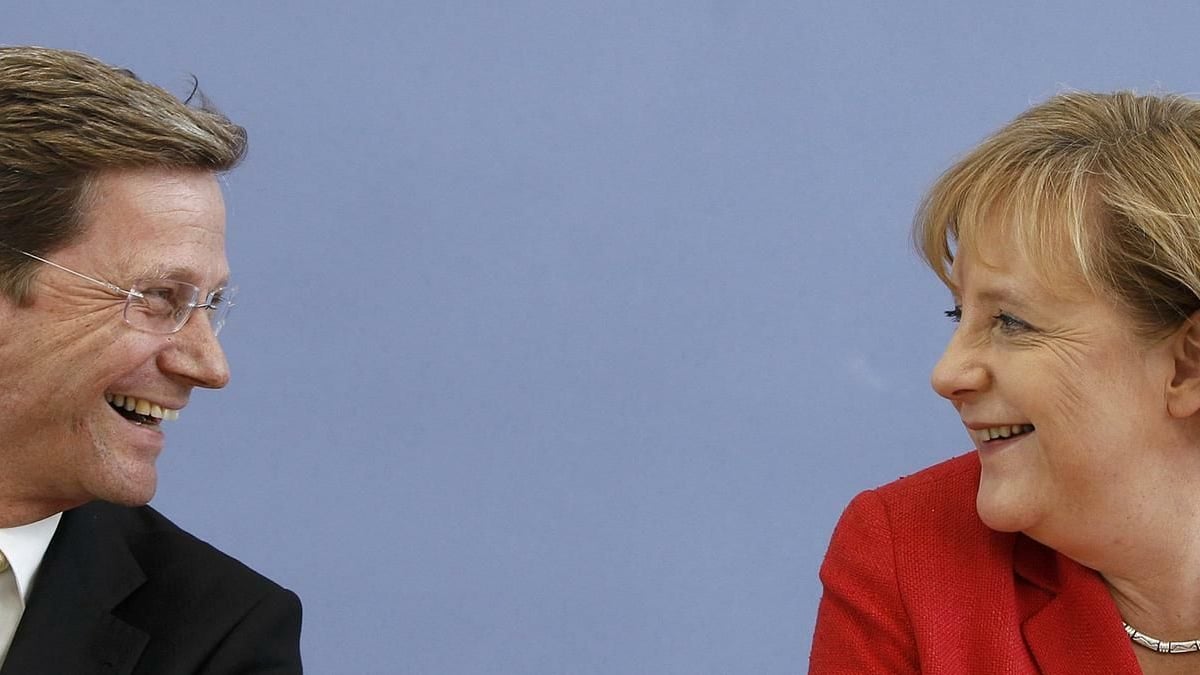
The Enduring Legacy of Guido Westerwelle: A Decade Since His Passing
As the calendar pages turn towards March 18, 2026, the world will mark ten years since the passing of Guido Westerwelle. His death on March 18, 2016, in Cologne, following complications from acute myeloid leukemia and a courageous bone marrow transplant, left a significant void in German and European politics. Interred at Melaten-Friedhof on April 2, 2016, Westerwelle's physical absence has not diminished the discussions surrounding his impactful career and the question that continues to resonate: How would this influential figure navigate the treacherous waters of today's global challenges?
Guido Westerwelle was more than just Germany's Foreign Minister and Vice-Chancellor; he was a political architect who profoundly shaped the Free Democratic Party (FDP) and, indeed, the broader political landscape of his nation. He was known for breaking down societal barriers, exhibiting a rare vulnerability in the often-rigid world of politics, and leaving an indelible mark that many believe would greatly benefit contemporary discourse. The upcoming ARD documentary "Westerwelle," significantly influenced by journalist Dominik Wichmann, offers a timely reflection on his life and potential contributions. Wichmann, who co-authored Westerwelle's biography "Zwischen zwei Leben," provides invaluable insights into the former minister's mindset and how he might have approached current geopolitical complexities.
Ten years since Guido Westerwelle's Tod, his approach to foreign policy remains a compelling subject of study. His personal qualities — described by his long-time life partner Michael Mronz as having a "smile: cheerful, positive, curious" – underpinned a leadership style characterized by principle and pragmatism. This article delves into his core philosophies, applying them to the volatile scenarios of the present day, and explores the enduring lessons we can glean from his unique political journey.
Westerwelle's Core Foreign Policy Philosophy: A Call for Restraint and Peace
Guido Westerwelle's foreign policy worldview was deeply rooted in a non-interventionist stance, characterized by a profound emphasis on what he termed "Besonnenheit" – prudence, sobriety, and restraint. This principle of restraint (Gebot der Zurückhaltung) was paramount to his approach. His vision for international relations was one built on a sustainable peace policy, a commitment that, according to Dominik Wichmann, would have remained unshaken, even in the face of evolving global dynamics. However, it's crucial to remember that Westerwelle's active political career concluded over a decade ago, predating some of the most profound geopolitical shifts and conflicts witnessed in central Europe and beyond. Consequently, his foreign policy framework was not directly shaped by these recent, tumultuous events.
For Westerwelle, diplomacy, dialogue, and a firm adherence to international law were the cornerstones of effective foreign policy. He believed in the power of soft power and multilateral cooperation to resolve disputes, rather than military solutions. This isn't to say he was naive about the world's dangers, but rather that he prioritized preventative diplomacy and the cultivation of long-term stability. In a world often quick to resort to confrontational rhetoric or immediate military action, Westerwelle's advocacy for restraint serves as a powerful reminder of the virtues of patience, strategic foresight, and a comprehensive understanding of complex situations.
Today, with numerous regional conflicts escalating and international norms being tested, Westerwelle's non-interventionist spirit, balanced with a clear-eyed view of national interests, offers a compelling alternative to more aggressive postures. Leaders grappling with intricate international dilemmas might find inspiration in his dedication to carefully considered actions and his belief in the lasting power of peace over transient military victories. This philosophy encourages a deep dive into root causes, a commitment to humanitarian aid, and an unwavering pursuit of diplomatic solutions, even when such paths appear arduous or slow.
Applying Westerwelle's Vision to Today's Geopolitical Landscape
When considering how Guido Westerwelle would address the foreign policy challenges of our time, certain principles from his tenure provide a clear framework. Despite his non-interventionist leanings, his commitment to Germany's foundational foreign policy tenets was absolute. A prime example is the Staatsräson of the Federal Republic of Germany to protect Israel and its interests. According to Wichmann, Westerwelle's dedication to this principle would not have wavered "one iota," demonstrating that his restraint was always balanced by an unwavering commitment to deeply held strategic alliances and moral obligations.
In today's turbulent environment, marked by conflicts in the Middle East, renewed great power competition, and challenges to democratic norms, Westerwelle would likely emerge as a steadfast "Mahner zu Besonnenheit" – an admonisher for prudence and temperance. He would be a vocal advocate for a rule- and international law-based order, pushing back against unilateralism and the erosion of established global norms. His voice would champion the United Nations, international treaties, and collective security mechanisms as indispensable tools for conflict resolution and stability. He would emphasize the importance of de-escalation, sustained diplomatic efforts, and the protection of civilian populations in crisis zones.
Imagine Westerwelle navigating current crises: one can envision him tirelessly engaging in shuttle diplomacy, fostering dialogue between opposing factions, and building broad international coalitions committed to peace. He would likely stress the importance of understanding the historical and cultural contexts of conflicts, moving beyond simplistic narratives. His approach would involve leveraging Germany's economic and diplomatic strength to promote stability, human rights, and democratic values, always within the framework of international law and a respect for national sovereignty. His pragmatism would ensure that while ideals were pursued, realistic and achievable outcomes remained the focus, seeking common ground even with difficult partners.
Leadership and Collaboration: A Pragmatic Approach to Governance
Beyond his foreign policy stance, Westerwelle's approach to domestic politics and coalition-building offers valuable lessons for today's fragmented political landscapes. He viewed coalition partners not merely as fellow party members, but as genuine partners with whom to collaboratively implement political positions over time. This pragmatic and results-oriented perspective enabled him to forge effective alliances, even across ideological divides. According to recollections from those close to him, he often felt a closer alignment with the CDU/CSU than with the SPD or the Greens, suggesting a certain ideological flexibility when it came to achieving governance.
This pragmatic attitude suggests that Westerwelle would have navigated a potential coalition with a Chancellor like Friedrich Merz with the same ease and effectiveness as he did with Chancellor Angela Merkel. His focus was on the work at hand, on finding common ground and practical solutions, rather than getting bogged down in partisan rhetoric or rigid ideological purity. In an era where political polarization often paralyzes legislative action, Westerwelle's ability to see coalition partners as collaborators in governance, rather than adversaries to be merely tolerated, provides a compelling model. It underscores the importance of mutual respect, negotiation, and a shared commitment to national progress above narrow party interests.
For current leaders, Westerwelle's example highlights the strategic value of fostering genuine partnerships. Cultivating trust and open communication with allies, both domestically and internationally, is crucial for effective governance and crisis management. His approach demonstrates that strong leadership isn't about uncompromising adherence to one's own agenda, but about the ability to unite disparate voices towards a common, beneficial objective.
A Personal Touch: The Human Side of a Political Giant
While his political achievements are numerous, Guido Westerwelle's legacy is also deeply intertwined with his personal courage and authenticity. He was a man who broke boundaries, not just politically, but socially. His decision to publicly address his sexual orientation, subtly at first during a 1999 interview in Venice, and later openly, demonstrated a willingness to be vulnerable and authentic in a public sphere that often demands conformity. This personal courage contributed significantly to his image as a leader who was not afraid to be himself, resonating with many Germans who valued his honesty.
The human dimension of Westerwelle's life is further illuminated by the reflections of his life partner, Michael Mronz, who recently spoke about his grief, love, and the promise he kept to Guido. Mronz's enduring memories of Westerwelle's "smile – cheerful, positive, curious" paint a picture of a man who, despite the immense pressures of high office, maintained a vibrant and engaging personality. This glimpse into his personal life, particularly in the years following Guido Westerwelle's death, humanizes the political figure and reminds us of the profound personal sacrifices often made by those in public service.
Westerwelle's ability to connect with people on a human level, coupled with his willingness to show vulnerability, stands in stark contrast to the often-impersonal nature of modern politics. His example reminds us that empathy, authenticity, and a personal touch can be powerful assets in leadership, fostering trust and rapport not only with constituents but also with international counterparts. It suggests that leaders who are comfortable in their own skin, and willing to share aspects of their true selves, can build stronger, more resilient relationships, essential for navigating complex challenges.
Conclusion
As we approach the tenth anniversary of Guido Westerwelle's passing, the question of how he would navigate today's foreign policy challenges is more than just a nostalgic exercise; it's an opportunity to reflect on enduring principles of leadership. His commitment to non-intervention, the command of restraint, and a sustainable peace policy, coupled with an unwavering dedication to international law and key alliances, would undoubtedly shape his approach. He would stand as a "Mahner zu Besonnenheit," advocating for diplomacy and dialogue in a world increasingly prone to confrontation. Beyond his political acumen, Westerwelle's personal courage and authentic leadership style offered a rare blend of strength and vulnerability. Ten years since Guido Westerwelle's Tod, his legacy continues to inspire, offering valuable insights into how prudence, pragmatism, and a genuine human touch can guide us through the complexities of modern foreign policy.